Reform and Investiture1046-1198
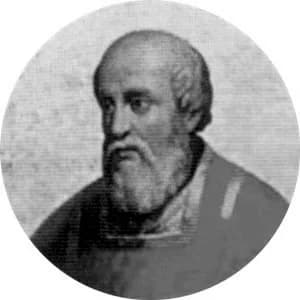
Honorius II
A blacksmith's son by tradition, and one of the negotiators of Worms, who owed his election to the swords of the Frangipani.
Pope no. 1631124-1130
Lamberto of Fiagnano rose on ability rather than birth; later writers made his father a blacksmith, which may be invention but reflects how unusual his ascent looked. As cardinal bishop of Ostia he was one of the men who hammered out the Concordat of Worms in 1122, and he was the natural continuator of Callixtus II's settlement.
His election was not natural at all. In December 1124 the cardinals chose Teobaldo Boccapecora, who was actually vested as Celestine II, when Roberto Frangipane burst into the church with armed men and acclaimed Lamberto instead. Celestine stood down. Lamberto, to his credit, resigned the office a few days later and made the cardinals elect him again properly, but the precedent was set: a Roman baronial family had decided a papal election by force, and the Pierleoni, the Frangipani's rivals, would remember it.
He governed capably for five years. He recognised Lothar III in Germany rather than the Hohenstaufen claimant, invested Roger II with Apulia after failing to beat him in the field, backed the new orders of canons regular, and confirmed the Knights Templar at Troyes in 1129.
A full essay on this pope is in preparation. The facts and summary above are complete and sourced.
Sources
- J. N. D. Kelly and Michael Walsh, The Oxford Dictionary of Popes (2010)
- Eamon Duffy, Saints and Sinners: A History of the Popes (2014)
- I. S. Robinson, The Papacy 1073-1198: Continuity and Innovation (1990)
- Further reading: Wikipedia