Reform and Investiture1046-1198
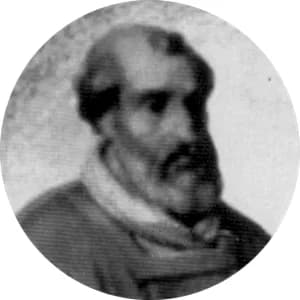
Anastasius IV
An old Roman who bought seventeen months of peace with his own city by conceding nearly everything his predecessors had fought for.
Pope no. 1681153-1154
Corrado of the Suburra was very old when he was elected, and had been a cardinal for nearly half a century; he had governed Rome as vicar during Innocent II's long absence in France. The curia chose him precisely because he was Roman, unthreatening, and unlikely to last, and he behaved accordingly.
Where Eugene III had fought the commune, Anastasius came to terms with it and lived in the city unmolested, the first pope in a decade able to say so. Where Eugene had refused for years to confirm Frederick Barbarossa's candidate for the archbishopric of Magdeburg, Anastasius confirmed him and dropped the quarrel. The concessions bought quiet, and his critics thought they had bought it too cheaply.
He was not idle. He confirmed the Knights Hospitaller in sweeping privileges, dealt with the affairs of the Scandinavian church, and spent freely on the fabric of Rome, restoring the Pantheon, which had served as a church for five centuries, and enriching the Lateran with plate and vestments.
He died in December 1154 and was buried in the porphyry sarcophagus that had once held the empress Helena, a piece of imperial recycling that later struck observers as presumptuous for so mild a pope. He left his successor a truce with Rome, an unresolved argument with a formidable young emperor, and a curia that had run out of Italians it could agree on.
A full essay on this pope is in preparation. The facts and summary above are complete and sourced.
Sources
- J. N. D. Kelly and Michael Walsh, The Oxford Dictionary of Popes (2010)
- Eamon Duffy, Saints and Sinners: A History of the Popes (2014)
- I. S. Robinson, The Papacy 1073-1198: Continuity and Innovation (1990)
- Further reading: Wikipedia