Reform and Investiture1046-1198
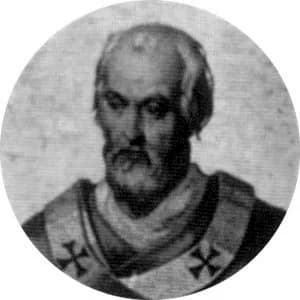
Eugene III
Bernard of Clairvaux's own monk, made pope overnight, who launched the Second Crusade and spent most of his reign locked out of Rome.
Pope no. 1671145-1153
The cardinals, meeting under guard the night Lucius II died, reached past their own number entirely and elected Bernardo, abbot of the Cistercian house of Sant'Anastasio outside Rome. He was a Pisan who had given up a cathedral career to become a monk under Bernard of Clairvaux, and Bernard's reaction to the news was closer to alarm than pleasure. He wrote his former pupil the five books of De consideratione, a sustained warning against being swallowed by litigation and ceremony, which became the standard mirror for popes for centuries.
Eugene could not be consecrated in Rome because the commune held it, so he went to Farfa, and spent much of the next eight years in Viterbo, Pisa, France and Germany. Rome admitted him twice on terms and expelled him again; Arnold of Brescia, the radical preacher who held that the clergy should own nothing at all, arrived in 1146 and gave the commune an ideology.
In December 1145 the news came that Edessa, the first crusader state, had fallen to Zengi. Eugene issued Quantum praedecessores, the first papal bull to define crusading privileges in law, and commissioned Bernard to preach it. Bernard did so with such effect that Louis VII of France and Conrad III of Germany both took the cross. The Second Crusade then collapsed in Anatolia and outside Damascus in 1148, and the recriminations fell on Bernard and on Eugene together.
He kept working: councils at Reims and Trier, the approval of Hildegard of Bingen's visions, a steady stream of judgements. He died at Tivoli in 1153 and was beatified in 1872.
A full essay on this pope is in preparation. The facts and summary above are complete and sourced.
Sources
- J. N. D. Kelly and Michael Walsh, The Oxford Dictionary of Popes (2010)
- Eamon Duffy, Saints and Sinners: A History of the Popes (2014)
- I. S. Robinson, The Papacy 1073-1198: Continuity and Innovation (1990)
- Christopher Tyerman, God's War: A New History of the Crusades (2006)
- Further reading: Wikipedia