Reform and Investiture1046-1198
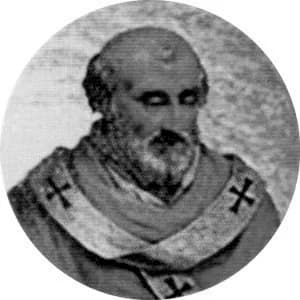
Alexander III
Twenty-two years against Barbarossa and four antipopes, and the council that fixed the two-thirds rule still used to elect a pope.
Pope no. 1701159-1181
Alexander III was pope for almost twenty-two years and spent most of them unable to live in Rome, with a rival wearing the same title and the strongest ruler in Europe determined to destroy him. He won anyway, and he won by outlasting: by keeping the loyalty of the kings of France, England, Sicily and the Spanish kingdoms, by allying with the cities of northern Italy, and by never once conceding the point at issue. When it was over he called a council that legislated the rule by which popes are still chosen.
He was also the most prolific lawgiver the medieval papacy produced. Something like seven hundred of his decretals survive, judgements in real cases sent to bishops across Europe, and they did more than any theory to make the pope the working supreme court of the West. Marriage law in particular came out of his reign in a shape it kept for four centuries: a marriage is made by the consent of the two parties, freely given, and by nothing else.
Bologna and the schism
Rolando Bandinelli came from Siena, taught at Bologna, and was brought into the curia by Eugene III, becoming chancellor of the Roman church under Adrian IV. It was he who read the letter at Besançon in 1157 that nearly got the papal legates killed, and he was the acknowledged leader of the Sicilian party in the college: the cardinals who believed the papacy's safety lay in the Norman alliance rather than in accommodation with the emperor.
Adrian IV died in September 1159 and the college split along the lines everyone expected. The large majority elected Rolando; a minority of perhaps nine elected Cardinal Octavian, who took the name Victor IV. Frederick Barbarossa summoned a council at Pavia in 1160 to judge between them. Alexander refused to attend, on the ground that a pope is judged by no one, and Pavia duly declared for Victor. Alexander excommunicated the emperor and released his subjects from allegiance.
The schism outlasted three antipopes. When Victor IV died in 1164 the imperial party replaced him with Paschal III, then in 1168 with Callixtus III, and even in 1179 produced a fourth, Innocent III, who lasted a few months. Every European ruler of consequence except the emperor recognised Alexander.
Exile
He spent from 1162 to 1165 in France, based mostly at Sens, running the church from exile on French and English money. Louis VII and Henry II both came to meet him, and their competition to be seen supporting him was worth more than any army.
It was during these years that the alternative to imperial power appeared in Italy. The cities of Lombardy, ground down by Frederick's attempt to enforce his regalian rights and by the destruction of Milan in 1162, formed the Lombard League in 1167. In 1168 they built a new fortress town in the Tanaro plain and named it Alessandria after the pope. The papacy and the Italian communes, natural antagonists in Rome itself, had found a common enemy.
Becket
The most famous quarrel of his reign was not his own. Thomas Becket, archbishop of Canterbury, broke with Henry II over the Constitutions of Clarendon and the trial of criminous clerks, and fled to France in 1164 to demand that Alexander back him without reservation.
Alexander would not, and could not. Henry II was one of the two monarchies keeping him alive against the emperor, and Henry knew it; there were moments when the English king dangled recognition of the antipope. So the pope spent six years restraining Becket, refusing to condemn the Constitutions outright at first, sending legates, brokering the settlement of 1170 that let the archbishop go home.
Four knights killed Becket in his own cathedral on 29 December 1170, and the calculation reversed overnight. Alexander canonised him in February 1173, faster than almost any canonisation of the age, and imposed on Henry II the penance of Avranches in 1172: a public oath that he had not ordered the murder, the abandonment of the offending customs, and the restoration of appeals to Rome from England. Becket dead gave Alexander everything Becket living had failed to win, and made Canterbury the busiest pilgrim shrine in northern Europe.
Legnano and Venice
Frederick came into Italy for the fifth time in 1174 and met the Lombard League at Legnano, north-west of Milan, on 29 May 1176. The League's infantry, formed around the wagon carrying the Milanese standard, held against the imperial cavalry until the emperor was unhorsed and his army broke. Frederick was missing for days and presumed dead.
The war ended there. The Peace of Venice in July 1177 gave Alexander recognition as lawful pope, restored the papal states, granted the Lombard cities a six-year truce that became permanent independence at Constance in 1183, and abandoned the antipope Callixtus III.
Frederick met Alexander in the porch of San Marco, prostrated himself and kissed his feet, and the pope raised him and gave him the kiss of peace. A porphyry lozenge still marks the spot for visitors. The scene was carefully staged by both sides, and unlike Canossa a century earlier it recorded a settlement rather than a humiliation.
The Third Lateran Council
In March 1179 Alexander summoned around three hundred bishops to the Lateran, the largest council the West had yet held, to close the schism and legislate.
Its first canon, Licet de vitanda, addressed the thing that had caused eighteen years of war: a disputed election. From now on a pope required a two-thirds majority of the cardinals present, with no distinction between the orders of cardinals and no role for anyone else, and a candidate who claimed the office without it was to be treated as an antipope along with his supporters. It is among the most durable pieces of legislation the medieval church produced, and it still governs every conclave.
The council also required every cathedral to maintain a master to teach the poor free of charge, set minimum ages for bishops, restricted the holding of several benefices at once, forbade the charging of fees for burials and ordinations, and turned on the Cathars of the south of France with a call for armed action against them that pointed towards the Albigensian Crusade thirty years later.
The lawyer pope
Alexander died at Civita Castellana on 30 August 1181, having been driven from Rome yet again by the commune, this time over Tusculum. When his body was brought back for burial in the Lateran the Roman crowd threw mud at the bier.
It was an unworthy end to the reign that completed the work Leo IX had started. The papacy Alexander left behind was recognised everywhere in Latin Christendom, had defeated the empire's claim to supervise it, held a court to which litigants from Iceland to Palestine appealed as a matter of routine, and had a rule for choosing its own head that no emperor could touch. Seventeen years after his death a canon lawyer of thirty-seven was elected on the first ballot and took the name Innocent III.
Sources
- J. N. D. Kelly and Michael Walsh, The Oxford Dictionary of Popes (2010)
- Peter D. Clarke and Anne J. Duggan (eds.), Pope Alexander III (1159-81): The Art of Survival (2012)
- I. S. Robinson, The Papacy 1073-1198: Continuity and Innovation (1990)
- Colin Morris, The Papal Monarchy: The Western Church from 1050 to 1250 (1989)
- Eamon Duffy, Saints and Sinners: A History of the Popes (2014)
- Further reading: Wikipedia