Reform and Investiture1046-1198
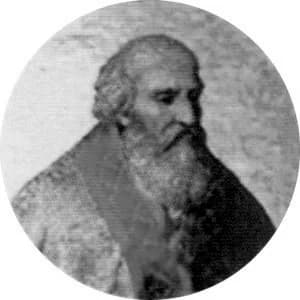
Lucius III
An old Cistercian who could not hold Rome, and whose decretal against heretics laid the first stone of the inquisition.
Pope no. 1711181-1185
Ubaldo Allucingoli was over seventy when he succeeded Alexander III, a Cistercian trained under Bernard of Clairvaux and a cardinal for forty years. He was elected at Velletri and never securely held Rome: within months the commune had driven him out over the disposal of Tusculum, and he spent his reign at Velletri, Anagni and finally Verona.
Verona is where he matters. Frederick Barbarossa came there in 1184, and the two men, who had spent decades on opposite sides, failed to agree on the two things that divided them: the inheritance of Matilda of Tuscany, and whether Henry VI could be crowned emperor in his father's lifetime. What they did agree on was heresy.
The decretal Ad abolendam, issued at Verona in November 1184, condemned the Cathars, Waldensians and other groups by name, and then did something new. It ordered every bishop to visit his diocese once or twice a year, in person or by deputy, to seek out heretics by sworn inquest rather than wait for accusations, and it required the secular power to punish those the church convicted, on pain of excommunication. Detection became a duty and a procedure.
He died at Verona in November 1185 and is buried in its cathedral.
A full essay on this pope is in preparation. The facts and summary above are complete and sourced.
Sources
- J. N. D. Kelly and Michael Walsh, The Oxford Dictionary of Popes (2010)
- Eamon Duffy, Saints and Sinners: A History of the Popes (2014)
- I. S. Robinson, The Papacy 1073-1198: Continuity and Innovation (1990)
- Further reading: Wikipedia