The Apostolic Age30-99
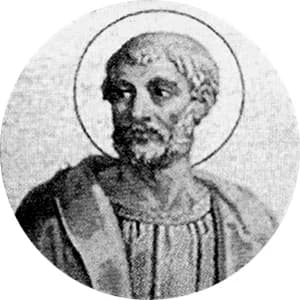
Saint Clement I
Author of the oldest surviving papal letter, a summons to order sent to Corinth around 96, and hero of a legend that ends with an anchor.
Pope no. 4c. 92-c. 99
Clement is the first bishop of Rome whose voice survives. Around 96 the Corinthian church deposed its presbyters at the urging of "a few rash and self-willed persons," and a long letter arrived from Rome, written in the name of the whole Roman community by a hand that tradition, from the second century on, identified as Clement's. It never names its author, never mentions a bishop of Rome or of Corinth, and never claims a right to command. It simply assumes that when a sister church falls into disorder, Rome should speak.
What it says is remarkable for its date. Order is built into creation and into the Roman army, where "not all are prefects or tribunes or centurions." The apostles appointed bishops and deacons and provided that "other approved men should succeed to their ministry," so dismissing blameless presbyters is "no small sin." The Corinthians should submit and send the Roman envoys home with good news. Corinth was still reading it aloud seventy years later, and a fifth-century scribe bound it into a Bible.
Legend took over where the letter stops. A fourth-century passion story has Trajan exile him to the quarries of Chersonesus in the Crimea, where he converts so many that he is thrown into the Black Sea with an anchor around his neck. In 868 Cyril and Methodius brought bones found there to Rome, and the basilica of San Clemente keeps them beneath its altar. The anchor became his emblem; the letter remains his monument.
A full essay on this pope is in preparation. The facts and summary above are complete and sourced.
Sources
- J. N. D. Kelly and Michael Walsh, The Oxford Dictionary of Popes (2010)
- Eamon Duffy, Saints and Sinners: A History of the Popes (2014)
- Michael W. Holmes (ed.), The Apostolic Fathers: Greek Texts and English Translations (2007)
- Clement of Rome, The First Epistle of Clement to the Corinthians (96) · link
- Further reading: Wikipedia